Male Breast Reduction | Gynecomastia Treatment Near You
Gynecomastia Surgery: Restore Your Confidence
Some men assume their enlarged breasts are simply the result of a few extra pounds, so they don't address the issue—they just avoid taking off their shirt in social situations. But what if you could get rid of the issue for good? If you're a man dealing with enlarged breasts, you may actually have a condition called gynecomastia. The good news is that this common condition is treatable with a straightforward surgical procedure that can restore your masculine chest contour and give you back the confidence to go shirtless at the pool, lake, or gym.
At South Tulsa Plastic Surgery, board-certified plastic surgeon Dr. Brenda Schiesel understands how gynecomastia can affect a man's self-esteem and quality of life. While gynecomastia is incredibly common (affecting up to half of all men at some point in their lives), it's rarely discussed openly. Dr. Schiesel provides discreet, expert care in a judgment-free environment. Her comprehensive training and compassionate approach make her an excellent choice for patients seeking gynecomastia correction.
Whether your enlarged breasts are caused by hormonal fluctuations, certain medications, or excess glandular tissue, gynecomastia surgery can remove the tissue beneath the nipples and restore a flatter, more masculine chest appearance. The procedure is straightforward, recovery is manageable, and results can be truly life-changing.
Contact South Tulsa Plastic Surgery today to schedule your consultation and discover how gynecomastia surgery can help.
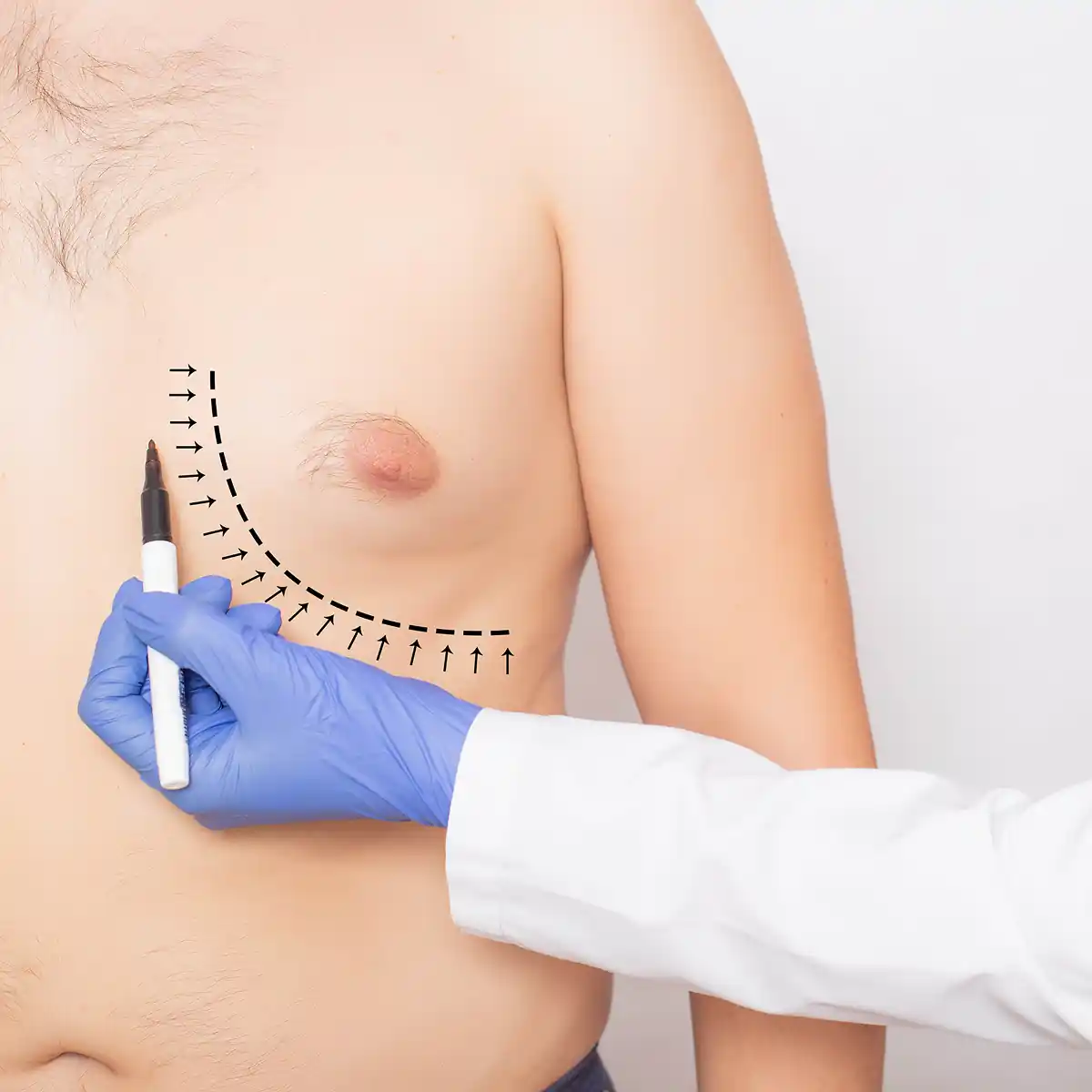
Understanding Gynecomastia Symptoms & Causes
What Causes Enlarged Male Breasts?
The term gynecomastia has Greek origins and means "woman-like breasts." The condition can affect one or both breasts, and it's far more common than most men realize. The problem is that most men never do anything about it or even know they have a diagnosable problem. However, gynecomastia is a legitimate medical condition.
Gynecomastia is even more common in teenage boys, affecting three out of four. For teens, enlarged breasts are usually due to the high levels of estrogen and testosterone coursing through their bodies during puberty. But like acne, in most cases, their enlarged breasts will pass with the end of puberty as hormones stabilize. For adult men, however, the condition typically doesn't resolve on its own and requires surgical intervention for correction.
True gynecomastia is usually caused by hormone fluctuations, particularly an imbalance between testosterone and estrogen. In adults, gynecomastia usually occurs in middle age and above. Just like during puberty, this is a time of fluctuating hormones as testosterone levels naturally decline with age.
Beyond hormones, certain medications are linked to enlarged breasts, including steroids, antibiotics, tricyclic antidepressants, heartburn treatment drugs, THC, anti-anxiety medications, and AIDS treatment drugs. Lifestyle factors can also contribute: heavy drinking, frequent marijuana usage, and weight gain are all risk factors for developing gynecomastia.
It's important to understand that not all male breast enlargement is true gynecomastia. Sometimes, excess fat from weight gain can create the appearance of enlarged breasts without the presence of excess glandular tissue. This condition, sometimes called pseudogynecomastia, may respond to diet and exercise alone.
Dr. Schiesel can diagnose true gynecomastia by feeling for a firm, rubbery mass beneath the nipple. This mass is usually less than 2 inches in diameter and is often sensitive to applied pressure. This glandular tissue is what needs to be surgically removed to achieve lasting correction.
Get Started with an Expert Gynecomastia Doctor Near You
Am I a Good Candidate for Gynecomastia Surgery?
In some cases, a man's enlarged breasts can be simply the result of weight gain rather than true gynecomastia, so Dr. Schiesel may first recommend that patients lose weight first to see if the condition persists once excess fat is reduced. This helps determine whether you're dealing with true gynecomastia (excess glandular tissue) or pseudogynecomastia (excess fat).
Additionally, heavy drinkers, marijuana users, and those who use steroids are not ideal candidates for immediate surgery, as their breast enlargement could be tied to their lifestyle choices, meaning that continuing these substances after surgery could cause gynecomastia to return.
Dr. Schiesel can accurately diagnose true gynecomastia during a physical examination. Before opting for surgery, Dr. Schiesel may work with your primary care doctor to try medication that can reduce the amount of estrogen your body is producing or block its effects. If conservative treatments don't provide adequate improvement, surgery becomes the most effective option. It's important that patients still have good elasticity in their chest skin so that it can tighten down over the slimmer contour after surgery. Men with poor skin elasticity may require additional procedures to address excess skin.
The Gynecomastia Surgery Procedure
Gynecomastia surgery is performed under general anesthesia as an outpatient procedure, meaning you'll go home the same day. The specific surgical approach depends on the amount of glandular tissue and fat that needs to be removed. For men with primarily glandular tissue, Dr. Schiesel will make small incisions, often around the areola border, where scarring can be minimized, to remove the excess breast gland. If excess fat is also present, liposuction may be combined with direct tissue excision to achieve optimal contouring. The goal is to create a flatter, firmer, more masculine chest appearance with minimal scarring.
The incisions made by Dr. Schiesel are small and strategically placed. There will be some swelling and discomfort following surgery, but this is short-lived and easily managed with prescribed pain medication. Patients will wear a compression garment for several weeks to help the chest adhere to its new contour and minimize swelling. This garment also provides support and comfort during the healing process. There is often some temporary loss of sensation in the treated areas after gynecomastia surgery, but this is almost always only temporary, and sensation typically returns within a few weeks to months.
Most men can return to work within a few days to a week, depending on the physical demands of their job. Strenuous exercise and heavy lifting should be avoided for about four weeks to allow proper healing. After that, patients can gradually resume all normal activities, including weightlifting and sports. Final results become apparent once all swelling has subsided, typically within a few months, revealing a flatter, more masculine chest contour that looks natural and proportionate.
To ensure the best possible aesthetic outcome and minimize visible scarring, Dr. Schiesel may recommend Biocorneum, an advanced silicone gel scar treatment with SPF 30. Once your incisions are fully healed, applying Biocorneum twice daily can help soften, flatten, and fade scars while protecting them from sun exposure that could cause darkening.
Frequently Asked Questions
Does insurance cover gynecomastia surgery?
If your condition is due to true gynecomastia with documented excess glandular tissue causing physical or psychological distress, insurance may cover the procedure. At South Tulsa Plastic Surgery, we don't accept health insurance directly, but we're happy to provide all necessary documentation, surgical notes, and medical records for you to submit to your insurance company for potential reimbursement.
We also offer flexible financing options through CareCredit, Cherry, and Alphaeon Credit to make the procedure more accessible regardless of insurance coverage.
Will my gynecomastia return after surgery?
When Dr. Schiesel removes a majority of the breast gland, this typically also removes the chances of the condition returning. Once the excess glandular tissue is removed, it cannot grow back. However, if the gynecomastia was originally caused by the use of steroids, marijuana, alcohol, or certain medications, it's possible for breasts to become enlarged again if usage continues after surgery. Maintaining a stable weight and avoiding substances that contribute to hormonal imbalances will help ensure your results last for life.
What are the risks of gynecomastia surgery?
Gynecomastia surgery involves all the risks inherent with any surgical procedure, including reaction to anesthesia, excessive bleeding, infection, and poor wound healing. Thanks to Dr. Schiesel's board-certified plastic surgery training, experience, and expertise, these complications are quite rare.
The main risk specific to gynecomastia surgery is temporary loss of sensation in the nipple area and surrounding chest, which usually resolves as nerves heal over several weeks to months. Other potential risks include asymmetry, contour irregularities, or visible scarring, though Dr. Schiesel's meticulous surgical technique minimizes these risks.
During your consultation, she'll discuss all potential risks and benefits in detail so you can make an informed decision about proceeding with surgery.
How do I schedule a consultation with a gynecomastia specialist near me?
Scheduling your consultation with Dr. Schiesel is easy and completely confidential. You can call our office directly at (918) 518-5144 to speak with a member of our compassionate team, or request a consultation online.
During your consultation, Dr. Schiesel will examine your chest, determine whether you have true gynecomastia or excess fat, discuss your goals and concerns, explain the surgical approach, and answer all your questions. We look forward to meeting you!