Understanding Your Body's Changes
What Are Stubborn Fat and Loose Skin?
Stubborn fat and loose skin are two distinct but sometimes related body concerns that many people experience at various points in their lives. Understanding what each condition is can help you recognize what you're experiencing and set appropriate expectations.
Stubborn fat refers to localized pockets of fat that persist despite proper diet and exercise. These are typically subcutaneous fat deposits just under the skin in specific spots, such as the lower abdomen, love handles, hips, thighs, or upper arms. The key characteristic of stubborn fat is that it remains even when you've achieved a healthy overall weight or have successfully lost weight elsewhere on your body. You might be normal weight or even lean overall, yet still have a small bulge of fat in one area that simply won't respond to your usual healthy habits. This is not about being overweight in general but rather about disproportionate fat deposits that seem remarkably resistant to change.
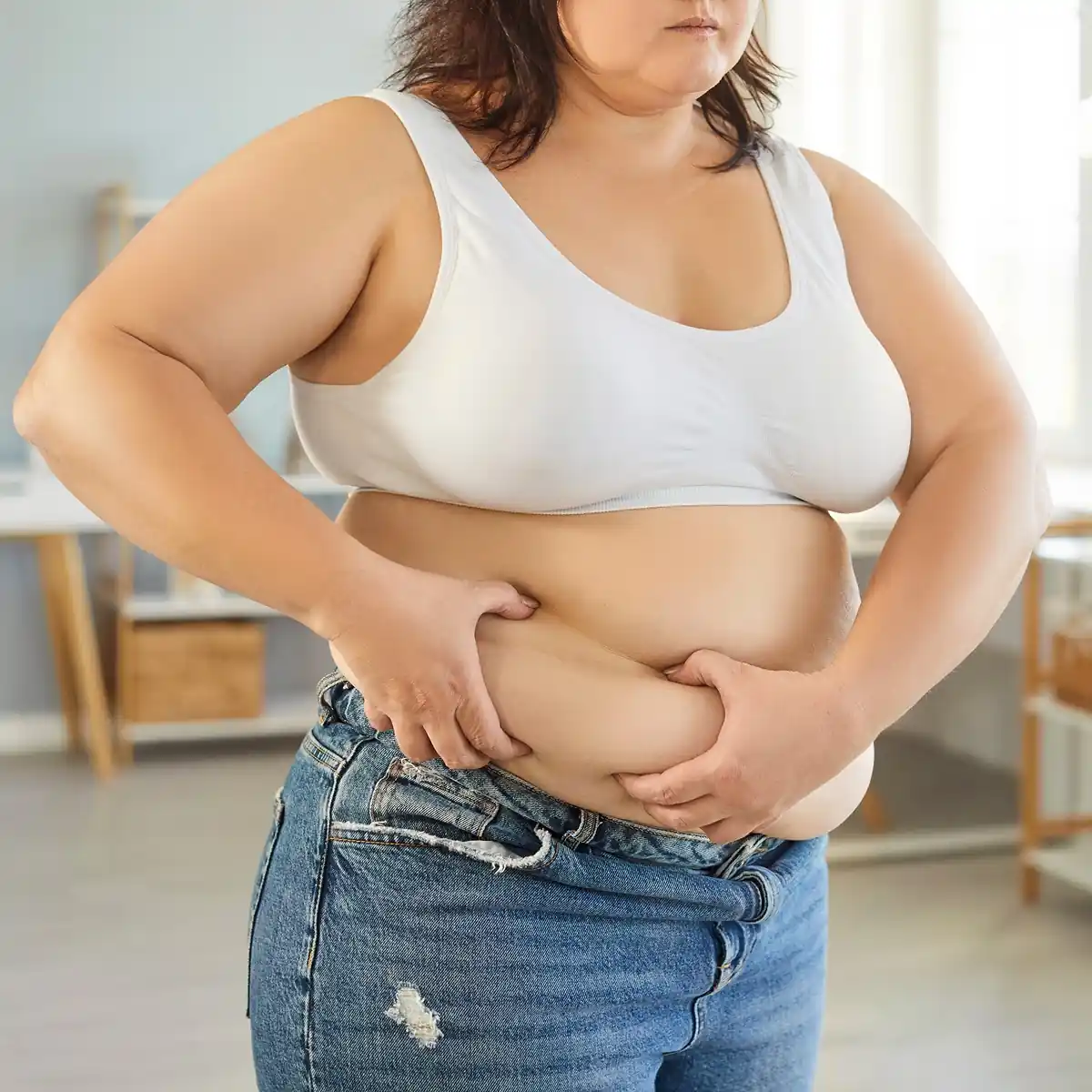
Loose skin, on the other hand, refers to skin that has lost its firmness and elasticity, causing it to appear saggy, wrinkled, or slack. It often presents as folds or crepey, hanging areas of skin, especially after significant stretching has occurred. In youth, skin snaps back into place easily due to abundant elastic fibers. By contrast, loose skin remains lax or droopy. Visually, loose skin may look thin and deflated, with a crinkled texture and a lack of tautness or tone. Common areas include the abdomen, upper arms, thighs, neck, and buttocks.
These two conditions can occur separately or together. For instance, someone who has lost a significant amount of weight might have both loose skin where fat used to be and remaining stubborn fat pockets in certain areas. Alternatively, someone might develop loose skin simply from aging without having excess fat, or they might struggle with stubborn fat areas while their skin remains relatively firm.
Both conditions are natural occurrences for many individuals. Stubborn fat relates to how our bodies are programmed to store and release fat in different areas, influenced by genetics and hormones. Loose skin often results from life events like significant weight loss, pregnancy, or simply the natural aging process. Neither condition is inherently harmful to your health, though both can be sources of cosmetic concern or physical discomfort. Understanding the biological reasons behind these changes can help you approach them with realistic expectations and appropriate self-care strategies.
Skin Tightening Treatments at South Tulsa Plastic Surgery
- Liposuction
- Tummy Tuck
- Mommy Makeover
- Butt Lift
- Arm Lift
- Breast Lift
Frequently Asked Questions
What Causes Stubborn Fat to Develop?
Stubborn fat has its roots in physiology and fat cell biology. Not all fat cells in your body behave the same way. Fat cells have receptors that respond to hormones like adrenaline and noradrenaline, which signal the body to break down fat during exercise or when you're in a calorie deficit. There are two main types of receptors on fat cells that influence fat release.
Beta-2 adrenergic receptors speed up fat burning, making it easier for the body to use stored fat for energy. Alpha-2 adrenergic receptors, on the other hand, slow down fat burning, essentially telling the fat cell to hold onto its energy stores. Stubborn fat areas tend to have a higher concentration of alpha-2 receptors and fewer beta-2 receptors. This means they are literally programmed to resist lipolysis, the breakdown of fat. In simpler terms, these fat cells don't respond as readily when your body is trying to burn fat for energy. They hold onto their stores tenaciously.
Blood flow also plays a role. Stubborn fat areas often have lower blood circulation. If you've ever noticed during a workout that some parts of your body, like your thighs or hips, stay cooler to the touch than others, it's due to less blood flow there. Fat with lower blood flow receives fewer fat-burning hormones and less oxygen, making it metabolize more slowly. The combination of fewer beta receptors and poorer blood supply means these regions break down fat at a slower rate, even when you're overall losing weight successfully.
Hormones have a strong influence on where and how the body stores fat. Estrogen, the primary female sex hormone, causes more fat cells to develop in the gluteofemoral region, meaning the thighs, hips, and buttocks, as preparation for fertility and childbearing. Women's lower body fat cells have about nine to ten times more alpha-2 receptors compared to men's fat cells in the same region. This biological difference means women's lower body fat is literally programmed to be harder to shed, an evolutionary design to safeguard energy for pregnancy and breastfeeding.
Men, influenced by testosterone, tend to store fat more in the abdominal area, both as subcutaneous fat under the skin and as deeper visceral fat around organs. While men generally lose weight somewhat more easily than premenopausal women, they often struggle with stubborn belly fat and love handles. These areas resist reduction even when men successfully lose weight elsewhere.
Insulin, the hormone that helps cells take up glucose, also signals the body to store excess nutrients and can inhibit fat breakdown. Consistently high insulin levels, such as from a diet high in refined carbohydrates and sugars, can make it easier to gain fat and harder to lose it. Cortisol, the stress hormone, can cause the body to favor storing fat centrally around the abdomen. Chronic stress and elevated cortisol levels are associated with increases in abdominal fat.
Genetics play a fundamental role in determining where your body prefers to store fat. Studies have identified numerous gene variants that determine whether someone tends to be apple-shaped, carrying weight in the belly, or pear-shaped, carrying weight in the hips and thighs. These genetic differences work at the cellular level, determining where fat will be stored in the body. Family patterns are often obvious. You might notice that body shape patterns run in families, reflecting genetics at work on stubborn fat distribution.
Age also influences stubborn fat. As we age, metabolism naturally slows down. Hormonal changes, particularly for women during menopause when estrogen levels drop, can shift where fat is stored. Many women notice that fat accumulates more in the abdomen after menopause rather than in the hips and thighs as it did earlier in life. In men, declining testosterone with age can reduce fat burning capacity and shift more fat to the belly.
What Causes Loose Skin to Occur?
Loose skin develops through several different mechanisms, most commonly related to significant stretching of the skin over time followed by a reduction in what was filling it out, or through the natural aging process.
When skin is stretched significantly and for a long duration, such as carrying extra weight for years or during pregnancy, the structure of the skin suffers lasting changes. Collagen and elastin fibers, which give skin its strength and elasticity, can become damaged and lose their resilience when they've been extended for too long. Think of an old rubber band that's been kept stretched. Over time it becomes brittle and doesn't snap back to its original shape. Likewise, skin that has been stretched for a prolonged period may not fully tighten up when the fat underneath is gone.
After large weight loss, there is often excess skin left hanging on the body because the skin's capacity to retract has been exceeded or impaired. Several factors determine how much loose skin someone might have after weight loss. The amount of weight lost is significant. Losing a substantial amount of weight, such as 50, 100, or more pounds, is more likely to result in loose, excess skin than a modest weight loss. The greater the change in body size, the more the skin has to adapt.
The speed of weight loss also matters. Rapid weight loss can increase loose skin. When weight comes off very quickly, the skin doesn't have much time to gradually contract. Slow, gradual weight loss gives the collagen and elastin more time to adjust and may result in less loose skin. This is why medical experts often recommend losing weight at a pace of about one to two pounds per week for healthy results. It's not only safer but also gentler on your skin's elasticity.
Age at the time of weight loss is another important factor. Younger skin has more collagen and better elasticity, so it can bounce back more easily after weight loss. Older skin has already experienced some natural collagen decline and loss of elasticity from aging, so it's less able to retract after stretching. Someone who loses weight in their twenties might have better skin retraction than someone losing the same amount in their fifties or sixties.
How long someone carried the extra weight influences outcomes. If you were overweight for just a year or two, your skin might recover better than if you carried that weight for a decade or more. The longer the skin was overstretched, the more wear on those elastic fibers and the less likely they are to fully recover.
Genetics and inherent skin quality play roles as well. Some people are born with more resilient skin than others. You might notice this anecdotally. Perhaps one person bounces back from pregnancy with hardly any loose skin, while another of the same age has lasting laxity. Genes determine things like skin thickness and baseline collagen content.
Lifestyle history affects post-weight-loss skin too. If you have a history of excessive sun exposure or smoking, your skin's quality may be poorer, making loose skin more likely after weight changes. Chronic UV exposure reduces the skin's collagen and elastin production, and smoking also degrades collagen and slows skin regeneration.
Beyond weight loss, aging itself is a major cause of loose skin throughout the body. As we age, the skin undergoes significant changes in its structural components. Collagen, which makes up roughly 80 percent of the skin's dry weight and provides firmness and strength, begins to decline in production starting around age 25. By the time someone reaches their fifties or sixties, they're producing much less new collagen and the existing collagen becomes more fragmented and less organized.
Elastin, the protein that allows skin to stretch and then snap back into place like a rubber band, also degrades with age. As elastin breaks down, skin loses its ability to bounce back after being stretched or pulled. Hyaluronic acid, a molecule that helps skin retain water and stay plump, also decreases with age, leading to drier, less voluminous skin.
The fat layer beneath the skin, called subcutaneous fat, can diminish or redistribute with age, removing the scaffolding that kept skin looking full and taut. When this internal padding decreases, the skin has less to drape over, contributing to sagging. Hormonal changes, particularly the drop in estrogen during menopause for women, accelerate collagen loss and reduce skin thickness and elasticity.
Where Does Stubborn Fat Most Commonly Appear?
Stubborn fat can appear in different areas of the body, and these tend to vary somewhat between women and men due to hormonal and genetic differences.
The lower abdomen, often called the belly pooch, is a classic stubborn fat spot for both men and women. Even after overall weight loss, people often find a residual soft fat pad below the navel. The abdomen contains many fat cells, more than other regions, and these fat cells do not break down as easily as fat cells elsewhere. For some, persistent belly fat may also indicate insulin resistance or high stress levels, which preferentially add fat to the midsection.
The flanks, commonly known as love handles, are the sides of the waist above the hips where fat can be particularly stubborn, especially in men. These fat pads on the lower back and sides are often diet-resistant and are essentially an extension of abdominal subcutaneous fat storage.
In women, the outer thighs, often called saddlebags, and the hips are common stubborn fat zones. During puberty, estrogen causes more fat cells to develop in this gluteofemoral region as preparation for fertility and childbearing. Women often notice that fat in these areas is very hard to lose. The inner thighs are another area many find resistant, with a little pocket at the upper inner thigh that might remain even with exercise.
The buttocks area, especially the upper buttocks or the banana roll under the butt cheek, can hold stubborn fat. Women with a pear-shaped body build up fat here under estrogen's influence. While a certain fat reserve in the buttocks is normal, excess can be hard to slim down without overall fat loss.
The upper arms, particularly the triceps area on the backs of the arms between shoulder and elbow, are a common complaint, especially for women. This area is prone to soft, pinchable fat that doesn't respond easily to toning exercises. Testosterone helps mobilize fat from cells, so men, who have higher testosterone, usually don't accumulate as much fat in the arms. Women, with lower testosterone, often struggle with arm fat.
The chin and neck area, where fat accumulates under the chin creating a double chin appearance, is a smaller pocket of stubborn fat. A person might be otherwise slim but still have fullness in the chin and neck area due to genetics or age-related fat distribution. Since you can't spot-reduce with facial exercises, this area often stays until overall body fat is very low.
Some people accumulate pockets of fat on the lower back or just under the bra line on the back in women. These can persist even after losing weight due to the same receptor issues. In men, excess chest fat can be stubborn, sometimes related to hormonal imbalances or simply a pattern of fat storage for some men.
Where Does Loose Skin Most Commonly Appear?
Loose skin can develop in various areas of the body, particularly in regions that experienced significant stretching or that are most affected by aging and gravity.
The abdomen and stomach area is one of the most common places for loose skin, especially after significant weight loss or pregnancy. In women who have been pregnant, the belly skin stretches considerably to accommodate a growing baby. After delivery, even if the weight comes off, the skin that was so stretched may not fully retract. In both men and women, large weight gain in the stomach, as in obesity, can create an apron of skin, known medically as a pannus, that hangs down when that weight is lost. People who have lost 50 or more pounds often cite the belly as the number one region of concern for excess skin. It can form deep folds and even cover the pubic area in severe cases.
The upper arms, sometimes referred to as bat wings, are another very common area for loose skin. The skin on the underside of the upper arms can become quite saggy, particularly in women or after significant weight loss. This area jiggles or flaps when you move your arms, which many people find bothersome. Even with strength training to build the triceps muscle underneath, loose skin in this area may persist because the skin itself has lost elasticity.
The thighs, particularly the inner thighs, can develop loose skin. Significant weight loss can leave flaps of skin on the inner thigh that may hang and even cause chafing when walking. The skin on the inner thigh is thinner and often stretch-marked if you carried extra weight there, so it's prone to laxity. Even without weight loss, as collagen decreases, you might see more sagging in the thigh area in later years. Skin can become crepey above the knees or on the inner thighs around menopause age and beyond.
The buttocks can also sag with age due to loss of youthful fat and muscle tone. The bottom can droop. After weight loss, some people describe their buttocks as deflated, with excess skin making the area look flat or flabby rather than firm and rounded.
The neck and chin area, often nicknamed turkey neck, is particularly visible since it's typically exposed. Loose skin under the chin and on the neck becomes more common with age. The neck skin is relatively thin to begin with and doesn't have strong bone or muscle support. As collagen and elastin decline, the neck skin easily gives in to gravity. Additionally, if a person gains weight, a fat pocket under the chin might stretch the skin. Later, if they lose weight or as skin loosens, that area can become a droopy flap.
The chest and breast area can experience loose skin as well. In women who have been pregnant or breastfed, breast tissue can stretch significantly and then may sag afterwards. Both men and women who lose significant weight can have sagging skin on the chest where fat used to provide volume and structure.
Can Stubborn Fat Be Prevented or Reduced?
While you cannot completely control where your body prefers to store fat due to genetic programming, you can take steps to minimize overall body fat, which eventually includes stubborn areas, and prevent excessive fat accumulation.
The foundation is creating and maintaining a calorie deficit through a balanced approach. Eat a nutritious diet focused on whole foods, including plenty of vegetables, fruits, lean proteins, whole grains, and healthy fats. Avoid or limit highly processed foods, excess added sugars, and refined carbohydrates, as these can spike insulin levels and promote fat storage. Portion control matters. Even healthy foods can contribute to weight gain if consumed in excess of your energy needs.
Engage in regular physical activity. Cardiovascular exercise helps burn calories and create the deficit needed for fat loss. Aim for at least 150 minutes of moderate-intensity aerobic activity per week. Strength training is equally important. Building muscle increases your resting metabolic rate, meaning you burn more calories even at rest. Work all major muscle groups at least twice per week.
It's crucial to understand that you cannot spot-reduce fat with exercise on a specific area. Many people hope that doing countless crunches will burn off belly fat or that thigh exercises will slim their thighs. Unfortunately, fat loss doesn't work that way. The body draws on fat from all over in a sequence largely determined by genetics and hormones. Doing an exercise for a certain body part will strengthen the muscles there but won't specifically burn the fat there. Fat loss tends to happen unevenly, and certain areas lean out before others. The stubborn areas are simply the places your body is biologically most reluctant to use fat from.
This doesn't mean targeted exercises are useless. They build and tone the underlying muscles, which can improve the area's appearance and support better posture and function. They just won't selectively melt away the fat covering those muscles. Overall fat loss through a combination of diet and full-body exercise is what eventually reduces stubborn fat, though it may be the last to go.
Manage stress effectively, as chronic stress elevates cortisol, which promotes abdominal fat storage. Practice stress-reduction techniques like meditation, yoga, deep breathing exercises, or engaging in hobbies you enjoy. Get adequate sleep. Poor sleep disrupts hunger hormones, increases cravings for high-calorie foods, and impairs your body's ability to metabolize fat effectively. Aim for seven to nine hours of quality sleep per night.
Stay well-hydrated. Proper hydration supports metabolic processes and can help control appetite. Drinking water before meals may help with portion control.
Be patient and maintain consistency. Stubborn fat is called stubborn for a reason. It takes time and sustained effort. If you create a consistent, moderate calorie deficit and maintain healthy habits, eventually even stubborn areas will reduce, though they'll likely be the last to respond. For many people, reaching very low overall body fat percentages is what's required to significantly diminish stubborn pockets, and this may not be realistic, necessary, or healthy for everyone.
Focus on overall health rather than perfection. Having some remaining fat in certain areas when you're otherwise at a healthy weight and living a healthy lifestyle is completely normal and not a health concern.
Can Loose Skin Be Prevented or Minimized?
While you cannot completely prevent loose skin in all circumstances, particularly after massive weight loss or with natural aging, you can take steps to support your skin's health and elasticity.
If you're planning to lose weight, aim for slow, gradual weight loss of about one to two pounds per week. This gives your skin time to adapt and contract as you lose fat. Rapid weight loss doesn't allow this adjustment period and significantly increases the likelihood of loose skin.
Stay well-hydrated. Skin needs water to maintain its elasticity and plumpness. Drinking adequate water throughout the day supports skin health from the inside out.
Eat a nutrient-rich diet that supports collagen production and skin health. Include foods high in vitamin C, which is essential for collagen synthesis. Good sources include citrus fruits, berries, bell peppers, and leafy greens. Ensure adequate protein intake, as amino acids from protein are the building blocks of collagen and elastin. Include foods rich in omega-3 fatty acids, like fatty fish, walnuts, and flaxseeds, which support skin health and reduce inflammation. Vitamin E, found in nuts, seeds, and avocados, and vitamin A from foods like sweet potatoes and carrots, also support skin health.
Protect your skin from sun damage throughout your life. UV radiation breaks down collagen and elastin, accelerating skin aging and reducing its ability to bounce back. Wear sunscreen daily, seek shade, and use protective clothing.
Avoid smoking and limit alcohol consumption. Smoking is one of the most damaging things you can do to your skin. It reduces blood flow, damages collagen and elastin, and significantly accelerates skin aging. Alcohol dehydrates the skin and can contribute to inflammation and premature aging.
Build and maintain muscle mass through strength training. While building muscle won't tighten loose skin directly, it can help fill out the space under the skin where fat used to be, potentially making skin appear tighter. A more muscular body provides better scaffolding for the skin to drape over.
Moisturize your skin regularly to maintain its barrier function and suppleness. While topical moisturizers can't rebuild collagen or elastin, keeping skin well-hydrated and protected supports its overall health.
During pregnancy, moisturize your belly and breasts regularly, though understand that much of whether you develop loose skin or stretch marks is determined by genetics, the size of your baby, and how much weight you gain. Staying within recommended weight gain guidelines for pregnancy and losing weight gradually after delivery can help minimize loose skin.
For those who have already lost significant weight, understand that some degree of loose skin may be unavoidable, especially if the weight loss was substantial, rapid, or occurred later in life. Minor improvements in skin tightness can occur naturally over time after weight loss, especially if you're younger. The skin may slowly adapt to new body contours to some extent. However, excessive loose skin often remains at least partially.
What Is the Emotional Impact of Stubborn Fat and Loose Skin?
Both stubborn fat and loose skin can carry significant emotional and psychological impacts. Understanding these effects is important because they affect quality of life beyond the physical aspects.
For stubborn fat, frustration is perhaps the most common emotion. People who eat well, exercise regularly, and maintain a healthy weight can feel deeply frustrated when certain areas simply won't respond to their efforts. There's a sense of unfairness. You're doing everything right, yet these pockets remain. This can lead to self-criticism, with people wondering what they're doing wrong, when in reality, biology and genetics are the primary factors.
Body image concerns are common. Stubborn fat pockets can make people feel self-conscious about their appearance, particularly in fitted clothing or swimwear. They might avoid certain activities, like going to the beach or pool, due to embarrassment about these areas. Some people become fixated on these spots, seeing them as major flaws even when others barely notice them.
For loose skin, especially after significant weight loss, the emotional impact can be particularly complex. After weight loss, individuals may have expected to feel and look fit and slim, and indeed they are healthier. But then they're confronted with unexpected sagging skin. Many people feel trapped or even betrayed by their bodies. They put in hard work to lose weight, but the loose skin doesn't reflect how they feel inside.
Body image and self-esteem often suffer. Some individuals feel more self-conscious after weight loss than before, despite being healthier, because of the loose skin. They may avoid looking at themselves in mirrors or shy away from intimacy because of embarrassment about loose skin areas. There can be a sense of having exchanged one body issue for another.
Depression or frustration can develop in more severe cases. There's a feeling of having done all this work but being left with a different problem. The disappointment of not achieving the expected outcome after such effort can be emotionally exhausting. Some people even express regret about losing weight, though they know intellectually it was the right choice for their health.
Practical discomforts add to emotional strain. Loose skin can cause physical issues like chafing, rashes, or infections in skin folds. Keeping these areas clean and dry can be challenging, leading to worry about odors or infections. About 44 percent of people in one study who sought skin removal after weight loss had experienced skin pain, ulcers, or infections from their loose skin. Such issues can make someone feel uncomfortable or frustrated constantly.
Clothing and social situations can become sources of stress. Loose skin can make finding clothes that fit properly difficult. Excess skin doesn't have the firmness of fat or muscle, so it can bunch oddly. People might wear compression garments or choose styles that cover and support the skin. Socially, there may be fear that others will notice the sagging skin or misinterpret it.
It's important to note it's not all negative. Many individuals also feel pride and strength seeing their loose skin as a badge of honor from their weight loss journey or life journey. Some wear it as evidence that they worked hard to lose weight. Others reframe aging-related loose skin as a natural part of life and focus on what their body can still do. Emotional impact varies widely and is very personal. But if negative feelings do arise, they are completely valid and common.
Coping often involves adjusting one's mindset or seeking support. Some find it helpful to talk with others who have the same issues, such as in support groups for weight loss patients, where people share tips and encouragement. Counseling or therapy can be beneficial, especially if struggling with body image or depressive feelings. Celebrating the positives, like improved health or strength, can shift focus away from appearance alone.
What Are Common Myths About Stubborn Fat and Loose Skin?
Several misconceptions surround stubborn fat and loose skin. Let's address some of the most common myths.
Myth: You can spot-reduce fat by exercising a specific area. This is perhaps the most persistent myth. Many people believe that doing endless crunches will burn belly fat or that thigh exercises will slim thighs. Unfortunately, you cannot choose where you lose fat. The body draws on fat stores from all over in a pattern determined by genetics and hormones, not by which muscles you're working. Targeted exercises strengthen muscles in that area but don't specifically burn the fat covering them. Fat loss happens systemically, and stubborn areas are simply the last to respond.
Myth: Stubborn fat means you're not trying hard enough. Stubborn fat is not a reflection of insufficient effort or willpower. It's a biological reality related to how fat cells in different areas respond to hormones and have different receptor profiles. Even people with excellent diet and exercise habits have stubborn fat areas. It's programmed into your physiology, not a personal failing.
Myth: Crash diets or extreme measures will eliminate stubborn fat. While creating a calorie deficit is necessary for fat loss, extreme measures like crash diets are counterproductive. They slow metabolism, cause muscle loss, are unsustainable, and often lead to regaining weight. Stubborn fat requires the same approach as any fat loss: a sustainable, moderate calorie deficit with healthy eating and regular exercise. There are no shortcuts that specifically target stubborn fat.
Myth: Loose skin after weight loss means you lost weight too fast or incorrectly. While losing weight slowly can help minimize loose skin, significant loose skin after major weight loss is often unavoidable regardless of how carefully you approach it. The amount of weight lost, how long you carried it, your age, and your genetics all play major roles. Someone who loses 100 pounds will likely have some loose skin no matter how gradually they lose it. This isn't a sign of doing something wrong.
Myth: You can tighten loose skin with exercises or creams. While building muscle can fill out space under the skin and improve appearance, exercise cannot tighten the skin itself. The skin's elasticity is determined by its collagen and elastin content, which cannot be rebuilt through exercise. Similarly, topical creams and lotions can moisturize and improve skin appearance superficially but cannot restore elasticity or eliminate significant loose skin. They cannot rebuild the underlying structural proteins that have been damaged.
Myth: Everyone who loses a lot of weight will have severe loose skin. While loose skin is common after major weight loss, the severity varies enormously based on individual factors. Younger people often have better skin retraction. Those who lose weight more gradually may have less loose skin. People with good genetics and skin quality fare better. Some individuals who lose substantial weight have minimal loose skin, while others have significant amounts. It's not a guaranteed outcome for everyone.
Myth: Loose skin is just cosmetic and not a real concern. While loose skin isn't a disease, it can cause genuine physical and emotional problems. Skin folds can lead to rashes, infections, and discomfort. Loose skin can interfere with exercise and daily activities. The psychological impact on body image and self-esteem is real and valid. Dismissing it as merely cosmetic minimizes the legitimate concerns people have.
Myth: If you have stubborn fat or loose skin, you're unhealthy. Stubborn fat pockets in someone at a healthy overall weight are not indicators of poor health. They're simply areas where your body preferentially stores fat. Similarly, loose skin after weight loss doesn't mean you're unhealthy. In fact, losing significant weight dramatically improves health markers even if loose skin remains. Having loose skin from aging is a natural process that happens to everyone to some degree, not a sign of being unhealthy.